
DELIBERATE
NOURISHMENT.
A considered approach to everyday eating — grounded in whole foods, seasonal produce, and the quiet intelligence of building food habits that endure.
Six pillars of
considered eating.
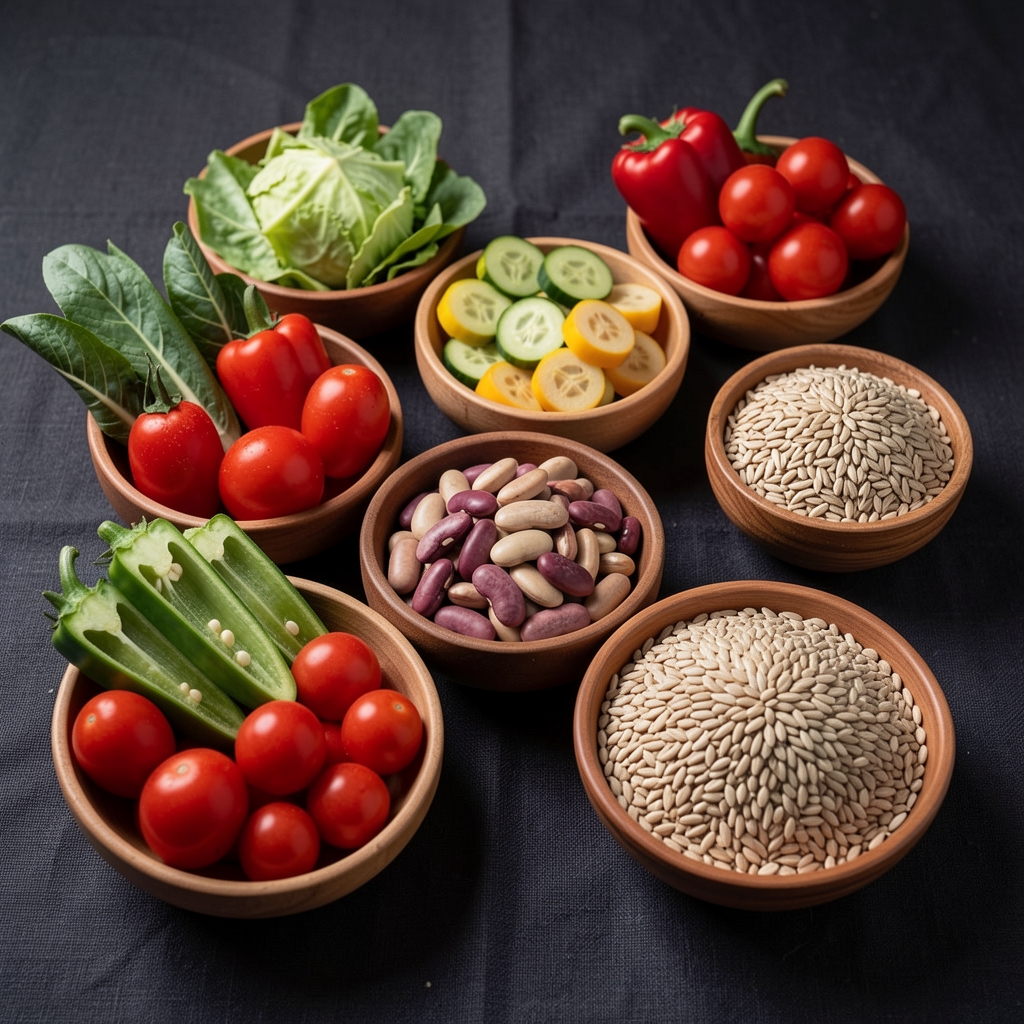
Whole-Food Foundations
Building a daily plate from seasonal produce, legumes, and unprocessed grains. The starting point of every lasting food habit — not a restriction, but a re-orientation.
Portion Awareness
Calibrating serving sizes without weighing or counting — through visual anchors and learned intuition over consistent practice.
Gut-Friendly Meal Planning
Structuring weekly meals around fermented foods, fibre-rich vegetables, and varied plant sources — a whole-plate composition that supports digestive wellbeing.
Mindful Eating Habits
Slowing the cadence of meals, reading satiety cues, and removing the noise of distracted eating. Attention to the act of nourishment itself.

Seasonal Cooking
Weight Management & Active Lifestyle
Aligning nutrition with physical activity patterns — not as a regime imposed from outside, but as a responsive daily food protocol shaped by your movement cadence, energy expenditure, and seasonal availability. The intersection of sport and fitness with everyday nutrition, without the orthodoxy.
View All Services
Real food, lived with
intention over time.
There is a quiet coherence to the way a body responds to food that is genuine, varied, and unprocessed. It does not announce itself. It accumulates — in energy across an afternoon, in the ease of digestion, in the simple absence of conflict between what one eats and how one feels.
The Eralonik approach reads that coherence carefully. It begins not with restriction but with observation — of eating cadence, of seasonal availability, of the particular rhythms of an individual life. From that observation, a balanced meals structure emerges that holds its shape week after week.
Nutritionist guidance here is offered as a considered practice rather than a corrective intervention. The goal is a daily food protocol sufficiently well-understood that it requires no sustained effort to maintain.
Read the Methodology
Four stages of a
considered food practice.
Initial Assessment
A structured conversation exploring current eating patterns, food preferences, lifestyle rhythms, and nutritional goals — recorded as a baseline document.
Meal Architecture
Building a weekly whole-plate composition framework — seasonal produce selections, macronutrient balance, and gut-friendly recipes chosen for the individual.
Habit Formation
Introducing changes at a pace that allows genuine integration — not a rapid overhaul but a thoughtful layering of new food choices over existing routines.
Ongoing Review
Periodic reassessment of the daily nourishment record — adjusting for seasonal rotation, shifts in activity, and evolving personal circumstances.
Questions about
nutritionist guidance.
A selection of questions encountered regularly across initial consultations. Answers are offered in the spirit of the Eralonik practice — considered, without haste, and grounded in evidence-informed eating principles.
A registered nutritionist works with individuals on food habits, daily intake patterns, and nutritional wellbeing through whole-food approaches and evidence-informed eating practices. The Eralonik approach is grounded in published nutritional research, practical meal planning, and long-form habit formation — not short-term regimes.
Most individuals find that a sequence of four to six sessions across three months provides sufficient structure to establish a sustainable daily food protocol. The first session is dedicated to the initial assessment; subsequent sessions refine the meal architecture in response to lived experience.
Weight management is addressed as a natural consequence of building considered food habits — not as a primary target imposed at the outset. When portion calibration, balanced meals, and macronutrient balance are established as habitual, body composition tends to settle into a range that reflects genuine daily energy needs.
Completely. The daily food protocol is always calibrated against activity levels. Sport and fitness routines are mapped against nutritional rhythm — pre- and post-activity eating cadence, seasonal produce availability, and hydration awareness are integrated from the first session.
Both formats are available. In-person sessions are held at 38 Mount Street, London W1K 2RB. Remote sessions are conducted via video call and maintain the same structured approach, including shared documentation and follow-up written notes after each session.
Seasonal rotation is a core principle. UK seasonal produce follows a predictable annual rhythm — winter brassicas, spring alliums, summer stone fruits, autumn roots — and building meals around this rhythm naturally produces the variety that supports gut-friendly composition and broad micronutrient intake.
The most useful thing about working with Eralonik was the absence of a script. The food habits we built together reflected actual life — not an idealised version of it.S.H. — London, 2024



A first conversation
costs nothing.
Send a message, outline where you are with your eating habits, and we will arrange a preliminary call to discuss what a considered food practice might look like for your particular life.
Get in Touch