THE SPECIALIST.
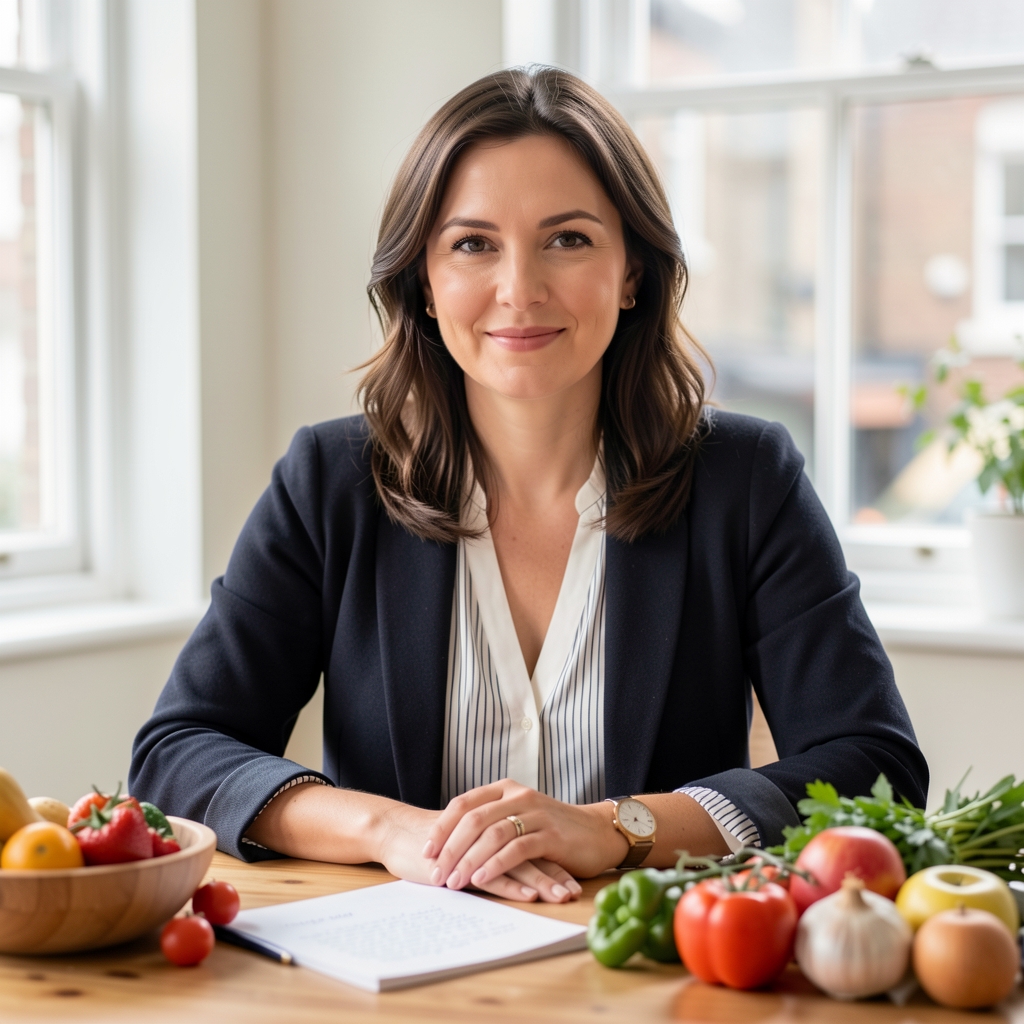
Twelve years of practice in nutritional guidance, shaped by a persistent interest in the relationship between everyday food choices and long-term physical wellbeing. The Eralonik approach did not arrive fully formed — it was assembled, slowly, from observation and the careful reading of published nutritional research.
Based in London. Working with individuals who want a considered, unhurried approach to building food habits that hold across seasons.
A practice built from
the ground up.
The foundation of this practice lies in formal nutritional study — undergraduate work in human nutrition and dietetics, followed by years of independent study in the adjacent fields of food anthropology, gut microbiome research, and behavioural approaches to eating habit formation.
The influence of seasonal-cooking traditions and regional produce cultures — encountered across extended periods in Southern Europe and Scandinavia — gave the academic formation a sensory and practical grounding that textbooks rarely provide.
That combination — of published-research literacy and hands-on engagement with real food preparation — forms the backbone of what Eralonik offers to the individuals it works with.
Completed formal nutritional science qualification. First independent consultations established in a London-based wellness setting.
Period of concentrated study in gut-microbiome research literature and fermented-food traditions. Introduced fermentation practice as a core element of the guidance framework.
Formalised independent practice under the Eralonik name. Developed the structured guidance methodology drawing on whole-food principles and seasonal meal architecture.
Ongoing one-to-one guidance at 38 Mount Street, London. Seasonal workshops and small-group sessions introduced from 2022 onwards.
Food as information, not reward or punishment.
The dominant cultural narrative around eating — particularly in the context of weight management and active lifestyle — frames food as something to be earned or atoned for. This practice does not operate in that register. Food is compositional. It carries micronutrient profiles, fibre content, fermentation potential, and seasonal variety. The task of good nutrition is to read these properties and act on them without moral overlay.
Seasonal availability shapes the plate.
Seasonal produce is not a dietary aesthetic — it is a practical principle. Ingredients at peak season are nutritionally denser, more economical, and more varied across the calendar year.
Habit formation over willpower.
Sustainable dietary change does not depend on motivation or restraint. It depends on the architecture of the environment and the deliberate construction of small, repeatable food decisions that accumulate into a lasting nutritional rhythm.
Research literacy is not the same as certainty.
Published nutritional research is the starting point of the Eralonik framework, not its conclusion. The field is rich with well-designed studies and equally well-designed contradictions. The practice reads both — and acknowledges where the evidence base is robust, where it is suggestive, and where it is genuinely unresolved. Guidance is calibrated accordingly. This is what evidence-informed practice looks like in honest operation.
“A good food habit is not a constraint you impose on yourself — it is a shape the day takes when the environment is arranged thoughtfully.”
This is the working conviction behind every guidance programme at Eralonik. The consultation process is designed to understand the actual conditions of a person's life — their cooking access, schedule, food preferences, relationship with physical movement — before any nutritional framework is discussed.
A framework that does not account for those conditions is not guidance — it is a list. Eralonik produces the former, not the latter.
Where the practice
concentrates.
The Eralonik practice is not generalist. Over twelve years, the work has converged around a specific set of questions that arise repeatedly in one-to-one nutritional guidance work:
How does an individual build a daily food routine that is both nutritionally sound and genuinely liveable? How do seasonal cooking patterns interact with the demands of a physically active lifestyle? And how does mindful eating — as a practice of attention rather than restriction — reshape the experience of daily nourishment over time?
Building plate compositions from unprocessed, seasonal whole foods over a structured period of habit formation.
Aligning daily food protocol with physical activity patterns without prescriptive restriction or calorie-counting orthodoxy.
Structuring weekly meals around fermented foods, fibre-rich vegetables, and varied plant sources to support digestive wellbeing.
Working with the pace and quality of eating as a form of attention — reading satiety cues, reducing distracted consumption.


Begin with
a consultation.
The initial consultation at Eralonik is a conversation, not an assessment. It is an opportunity to understand your current food environment, your relationship with cooking, and where — if at all — a structured approach to dietary habit formation might be useful.